Reading Food Culture Through Color Names: How the Japanese "Eat with Their Eyes"
Published
Overview
A surprising number of color names appear in the vocabulary we use to describe the dining table. “Sekihan red” (red rice), “wheat brown,” “apricot,” “lemon yellow”—these color names are not merely decorative expressions, but are considered to be like mirrors reflecting how a culture has engaged with food. This article introduces “Food Culture Viewed Through Color” (Journal of Cookery Science of Japan, 2003) by Kazuhiko Takamiya, a paper that examines food culture from the perspective of color names. Through a comparison of Japanese and Chinese color names, the study highlights distinctive features of Japanese color sensibility around food, and is introduced here as research that offers valuable insights for anyone working with color professionally or as a hobby.
Key Points of the Study
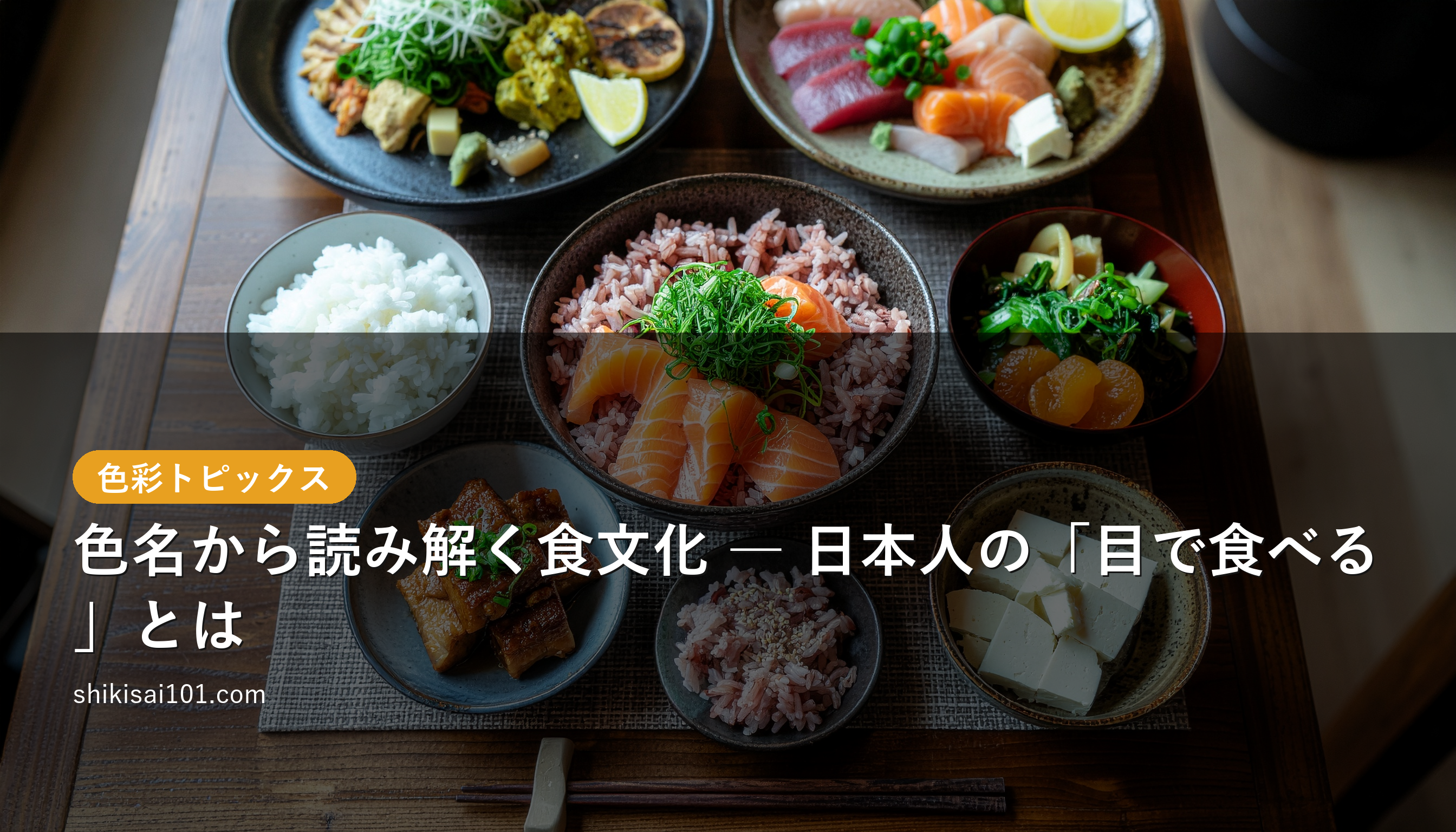
The paper lists numerous color names related to food and examines their characteristics. According to the author, Japanese food culture is colored by names such as “sekihan” (red rice), “salmon color,” “shiratama” (white rice dumpling), “shirauri” (white melon), “wheat brown,” “boiled-milk vinegar color,” “apricot,” “green mandarin,” “biwa” (loquat) color, “lemon yellow,” “karashi” (mustard) color, and “sansho” (Japanese pepper) color—all examples in which the names of ingredients or seasonings have been adopted directly as color names.
Of particular note is the comparison between Chinese and Japanese color names. The paper suggests that the overlapping use of color names in China tends to be “logically” systematized, whereas Japanese people have long been said to “eat with their eyes,” indicating a deep connection between visual aesthetics and the experience of eating. Even within cultures that handle the same notion of “color,” there are said to be significant differences in the underlying ways of thinking, and the paper presents this as an intriguing perspective for comparative research on food culture.
Significance for the Field of Color
The phenomenon of color names emerging directly from the colors of ingredients themselves is considered, in the paper, to demonstrate how a culture observes and verbalizes food. For example, the abundance of cases in Japanese where ingredient names—such as “salmon color,” “apricot,” and “lemon yellow”—have been transposed into color names is argued to suggest that everyday visual experiences at the dining table may have contributed greatly to the formation of color vocabulary.
These insights can be readily applied to modern color practice as well. When building color palettes for wagashi (Japanese confectionery) packaging, Japanese restaurant menus, or graphics that convey a sense of season, consciously incorporating “food-derived color names” can help create expressions in which words and color images align, making the message easier to convey.
The phrase “eating with the eyes” is also cited in the paper as a concise expression of the importance of plating and color arrangement. It is said to share common ground with the concept of the “five colors” (red, blue/green, yellow, white, and black) long valued in Japanese cuisine, and is introduced as a perspective applicable to modern, vision-driven fields such as food styling, product packaging design, and food photography for social media.
Summary
Food and color are inseparably linked, and the paper’s approach of decoding food culture by tracing color names is described as one that helps us rediscover the rich cultural accumulation hidden behind words we use without a second thought. When we hear color names like “salmon color,” “biwa color,” or “sansho color,” we may be evoking not only the colors themselves, but also the aromas, textures, and even the seasons of those ingredients. The paper suggests that, when considering color schemes or designs, tracing the origins of color names from one’s own culture may serve as a clue to expanding one’s expressive range.
Paper Referenced in This Article
- Takamiya, K. (2003). “Food Culture Viewed Through Color.” Journal of Cookery Science of Japan, Vol. 36, No. 2, pp. 177–183. DOI: https://doi.org/10.11402/cookeryscience1995.36.2_177